
A meeting day, start to finish
9:30, client session. Phone face-down on the table, recording. You say “I’m recording this so I don’t have to take notes” and nobody blinks. For fifty minutes you do the thing you are being paid for, which is listening. When it ends you stop the recording and put the phone away.
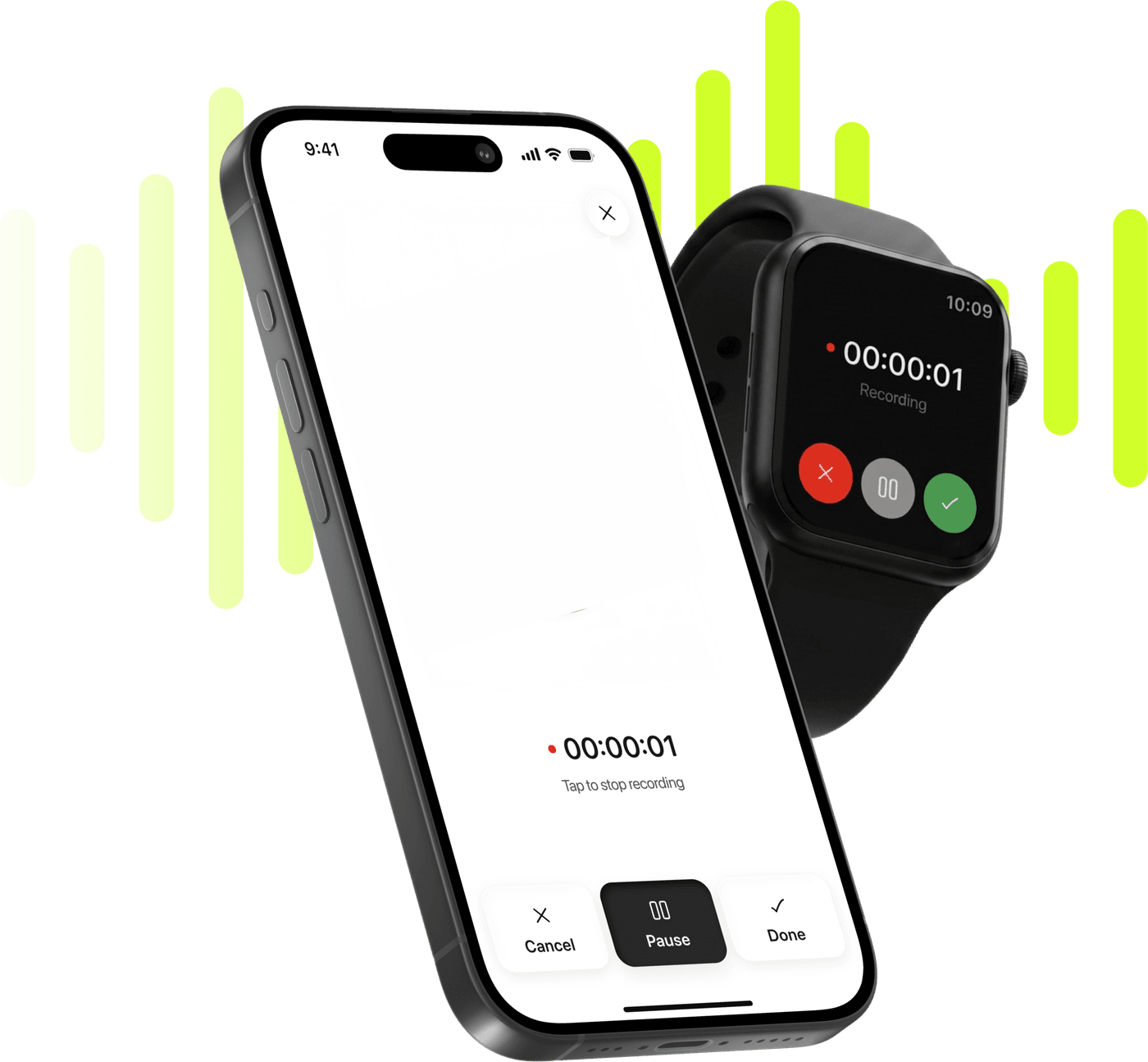
12:40, a 1:1 over lunch. No table to put a phone on, and taking one out mid-conversation would change the conversation. You start it from your watch instead, and it arrives on your phone as the same kind of note when you are back within range.
15:00, workshop. Four people, ninety minutes, a whiteboard. The recording is long and the transcript is long, which is exactly when speaker labels stop being a nicety: you rename the four voices once, and the argument about scope reads as an argument between people instead of a wall of text.
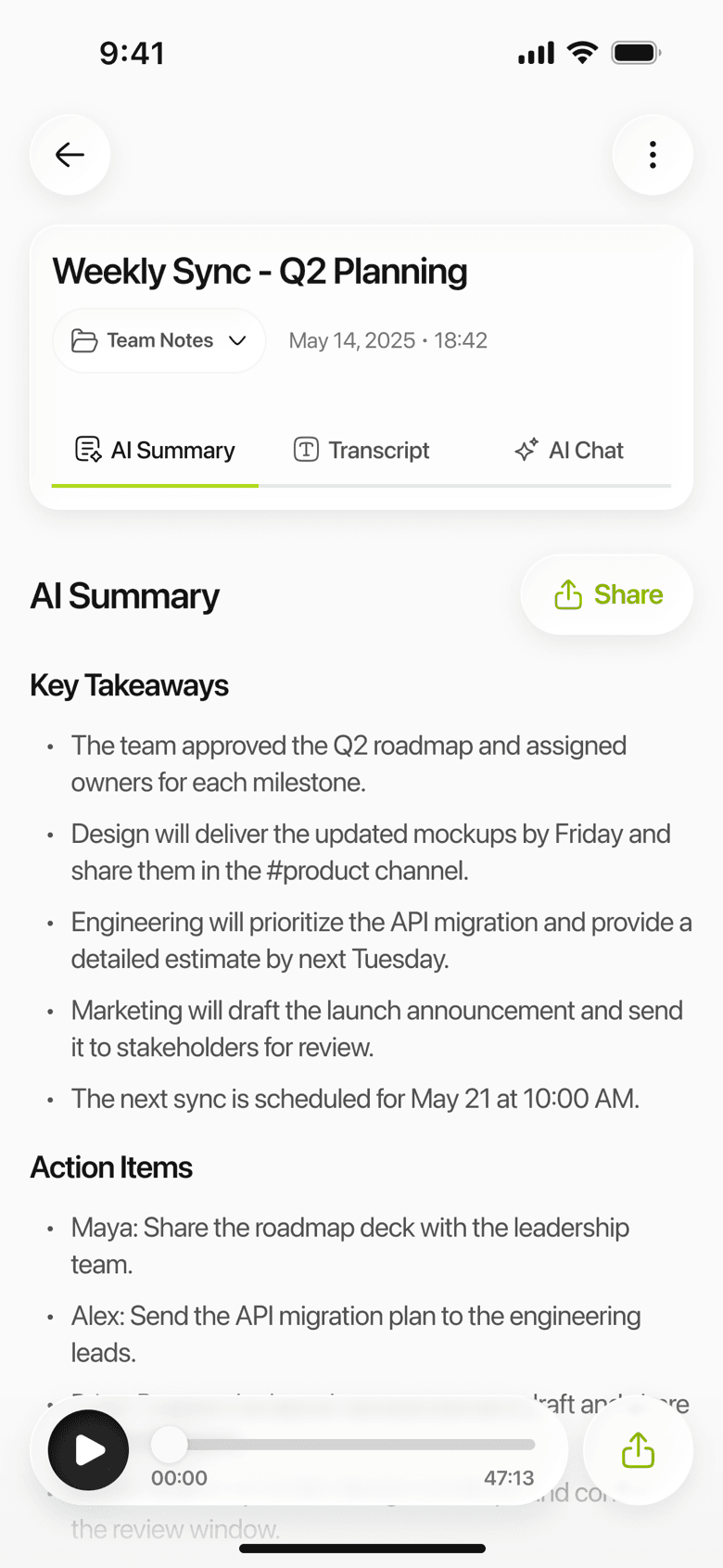
17:30, twenty minutes before you go home. Three notes, three Executive summaries. The client one goes to the client. The workshop one goes into the project channel. And for the question you cannot quite answer — did they commit to the date or say they would check? — you ask the note instead of scrubbing ninety minutes of audio.
What this is
A recorder that gives you minutes. Press record in the room you are in, get the words back split by voice, and choose the shape of the document you send on.
Limemo records that room rather than joining Zoom, Google Meet or Teams calls, and asks for no calendar access.
What it does cover is the online meeting you did record: save the file out of the platform and import the video. You get the same transcript and the same summary formats; the only difference is that the file came from somewhere else.
A recording is never lost. A phone call coming in pauses it and it picks up again, sometimes after a tap; a full disk ends a recording of ten seconds or more with a save; a failed upload leaves it on the main screen to try again. Ninety minutes of workshop is not a thing you want to re-run.
The small things that decide it in practice
Nothing to set up before a meeting. No invite, no link, no admin. The gap between deciding to record and recording is one tap, which matters when the decision gets made as you sit down.
The watch is not a gimmick here. The meetings where a phone on the table would be wrong — a walk, a corridor, a lunch — are exactly the ones you would otherwise write up from memory. Recording on Apple Watch covers what happens on the wrist and what waits for the phone.
The transcript is fixed, the summary is yours. The transcript is written once and stays as the record of what was said. The summary you can rewrite before it goes out, and undo if the rewrite was worse — which is the right way round for something you are about to send to a client.