
An interview day, start to finish
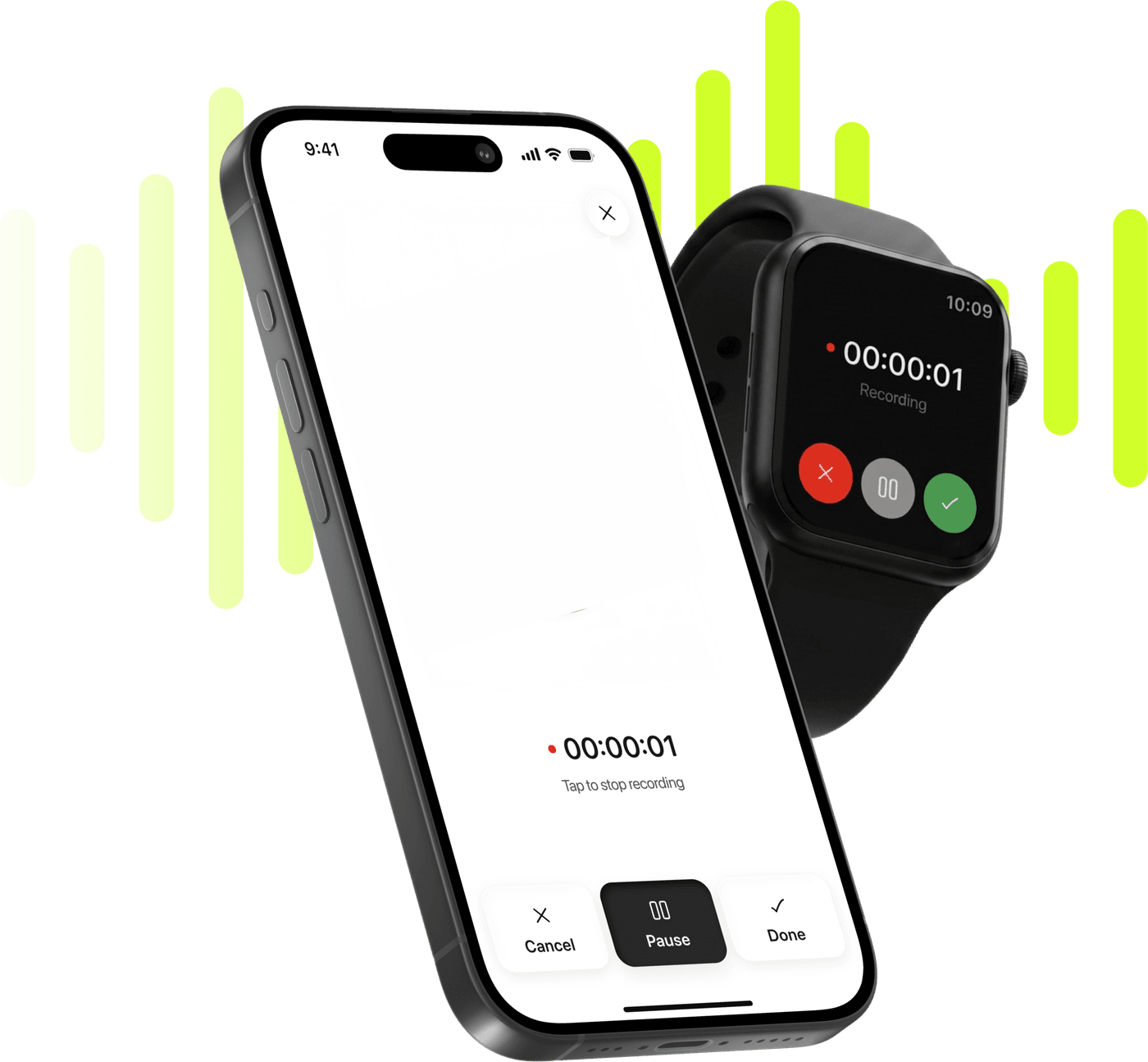
10:00, in person. Phone on the table between you, recording. You tell them it is recording, which you were going to do anyway. You ask your questions and you do not write anything down, which is the single biggest change: an interview where you are not taking notes is a better interview.
14:00, a file from somewhere else. The morning’s other interview happened on a call and the platform recorded it. You save that file into Files, import it, and forty minutes of audio joins the same list as the one you recorded yourself. Same transcript, same speaker labels, same formats.
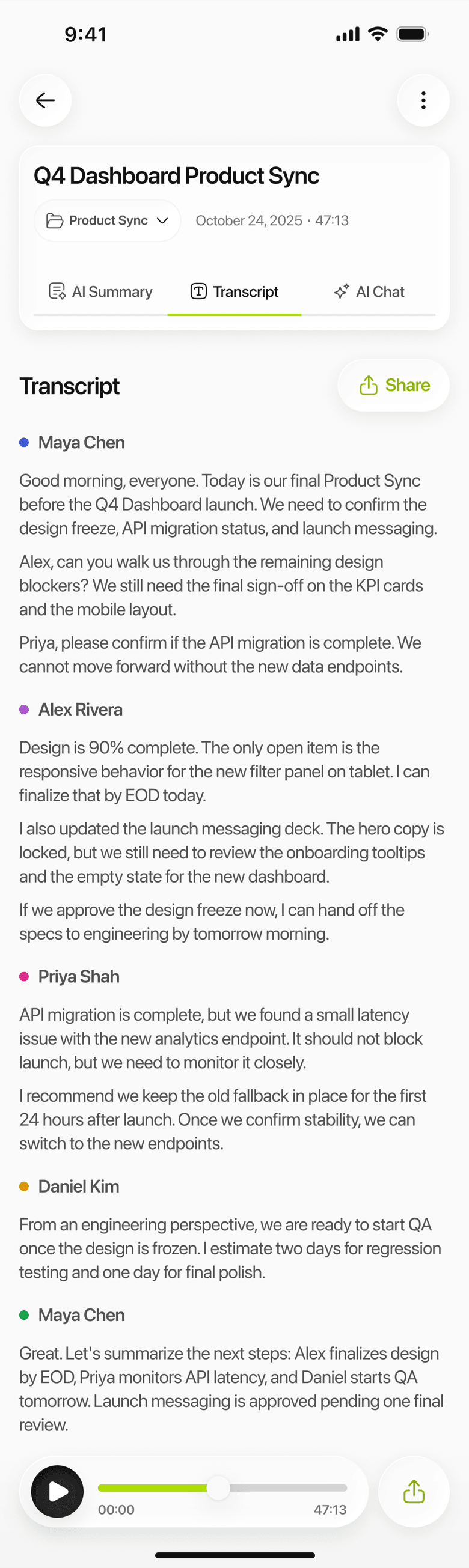
17:00, writing. Now the transcript is the tool. You rename the voices to real names so the document reads properly. You ask the note where they talked about the pricing change, and it tells you rather than making you scrub. You take a Custom summary — every quote about pricing, with who said it — and paste that into your draft as a working list.
Later, when it matters. A quote gets challenged. The audio is still there, beside the words it became. That is the whole reason the recording is kept rather than discarded after transcription.
The two things this is actually for
Telling the voices apart. An interview is two people and a transcript that cannot tell them apart is half a transcript. Speaker identification runs on every recording, so a two-voice conversation normally comes back marked as Speaker 1 and Speaker 2 — then you name them, once, and the document is readable by somebody who was not there.
Keeping the audio. The transcript is written once and never rewritten, and the recording stays beside it. For a meeting that is a nicety. For an interview it is the job: the moment a subject says I never said that, the thing that settles it is the recording, not a text file that could have been edited by anyone.
A recording is never lost. An interruption pauses it and it picks up again, sometimes after a tap; a full disk ends a recording of ten seconds or more with a save; a failed upload leaves it on the main screen to try again. An interview is not a thing you can re-run.
Two routes in, one kind of note
Some interviews you record on the phone. Some arrive as files — from a dedicated recorder, from a call platform, from a colleague. Both end in the same place.
Recording and transcribing on iPhone is the first route, and it is what most in-person interviews want: one tap, phone on the table, nothing to set up. Importing an audio file you already have is the second, and it takes what your recorder produced — one file per import, so five interviews are five imports.
Limemo does not join a call or record a phone line. If your interviews happen on the phone, the call platform’s own recording is what you import afterwards.
What it gives an interview
A subject says the thing at minute forty. You do not scrub for it — you ask the note where they said it, and the audio is one tap under the line to check it against.
Two voices told apart, names you set once, a summary in the shape you chose. An export is speaker name and then speech, under a line giving the date the note was created — a document you can quote from and hand to an editor.